
Planning “Cultural Identity” as Urban Policy
Esch-sur-Alzette on tender for European Capital of Culture and 10-year plan to transform post-industrial city into cultural hotspot
In 2017, after seven years of planning and deliberation, Esch-sur-Alzette in Luxembourg Introducing the cultural strategy for the next 10 years.appropriately named document [Connexions]identified the sector’s flaws (and its strengths), tried to fix them, and rebuild the industry from the ground up in a variety of ways.
Also, and this is very important, the document made ‘culture’ central to regional development.
in the opening line of [Connexions]the author notes that in Esch-sur-Alzette, the scheduled end of the program in 2027, A defined internationally recognizable cultural identityThis planned identity should be characterized by three main characteristics: Creativity, Diversity When innovation.
These are characteristics that are particularly suitable for Luxembourg. Luxembourg is a European land of “crossroads”, France, Belgium, GermanyThe Grand Duchy has three official languages and Esch itself has 122 registered nationalities. These are all countries with less than 700,000 inhabitants.
Post-industrial Quo Vadis
“Quo Vadis” in Latin means “Where are you going?” It refers to Saint Peter’s first encounter with Christ risen from the grave, and the analogy with the post-industrial city is very apt here. These places were the economic and manufacturing powerhouses of the 20th century.th century, charming Low-skilled labor with middle-class wages.
However, in the 1980s and 1990s, industry moved away from many of these cities, leaving unemployed people and vacant factory space, creating large gaps in the labor market. Many of these cities have since cultural base By exploiting the derelict structures left behind by the industrial sector, spacious building High ceilings and open floor plans.
this is what happened New York in the mid-to-late 1950s For manufacturing areas Soho began to move away from manhattan But this synergy was born out of economic pragmatism.
The building space these manufacturing institutions left behind was cheap, spacious, and in between. Midtown and financial districtOver the next 20 to 40 years, Soho became one of the world’s biggest artistic hotspots.
A prominent example in New York is post-industrial cityespecially in Europe, focuses on the development of cultural sectors, especially on the shoulders of derelict industrial sites.
Likewise, this applies to Esch, a major steel-producing city. German industrialized Rhineland and the Coal mines in northeastern France – the backbone of European Coal and Steel Communitywhich later became the European Union.
Local Perspectives on Cultural Progress in the Last 5 Years
For insiders to address the cultural development of Esch, The Mayor.EU Asked for local opinion – Ognian “Flame” Darinova Luxembourg-based poet, University of LuxembourgIn 2022, Darinov will Lawrence Prize for Literature (PRIX LAURENCE) Bettamboola town in the region of Esch.
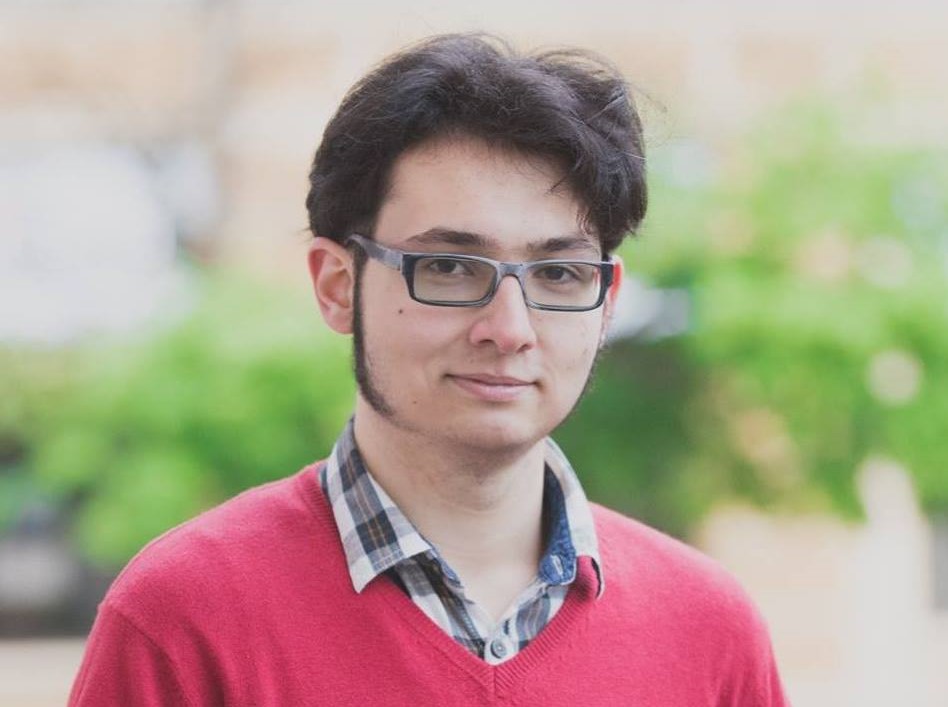
“Locals want to continue developing the cultural sector after Esch2022 is over.”
Source: Ognyan ‘Flame’ Darinov on Facebook
Prix Laurence is an initiative organized through the European Capital of Culture Esch2022. Darinov himself has lived in the Grand Duchy and the Esch region since 2017.
According to him, when he first came to the area, he didn’t pay much attention to the local cultural scene, partly because there wasn’t much to see. The person who asked Luxembourg literature I answered simply: “none“
Darinov continued:I eventually found out that it wasn’t true and in fact there are various sources of “silent” literature. My first impression of Esch in 2017 was that it’s a city that ignores the past and the present in pursuit of identity.Or don’t know which way to turn“
Then, in 2018, the University of Luxembourg “Luxembourg Literature in English”, a subject taught by the first professor of the Luxembourg University of Philosophy. “It’s a small step, little more than a college course, but it marks a general rethinking of local culture and its place.“
He further explained that Luxembourg is home to many different and powerful cultures, including French, German, and British, and that for that culture to be truly local, the ‘local’ needs to be viewed more detached and broadly. did. ‘.
“Luxembourg culture is not only made of the Luxembourgish language, it is also a culture made of the clash of cultures taking place in Luxembourg or Luxembourg territory.”
Mr. Darinoff is not familiar with the documents and policies of the Esch-sur-Alzette 10-year cultural plan. Nevertheless, through his own experience, he has undoubtedly, in the last five years, the sector has grown and there is “Sense of Diversity” throughout cities and regions.
This is an opinion clearly shared by local authorities in their 2021 evaluation of the project, Agenda 21They also point out that, while not perfect, the area is arguably more culturally vibrant and ready to take on a variety of challenges. european capital of culture label.
Furthermore, through cooperation with the city authorities, the report will draw from a cultural scene that is completely cut off from the city authorities, Department of Culturethey now have a very entwined, close-knit and supportive community.
But the biggest challenge for Esch’s cultural strategy lies in the next five years. This is often because the administration strengthens the cultural sector with the support of local authorities before the city becomes the European Capital of Culture. Then activity peaks in ‘special’ years and support quickly dries up, leaving a bloated and volatile sector.
This is also pointed out in the Agenda 21 assessment. Now Esch has its actors and venues, but it needs to consolidate the industry and look to the future. Darinov himself has doubts about the city as a city. European level cultural base in the long run.
“Given that the population of the Grand Duchy is constantly shifting between borders and nationalities, Luxembourg is a place that is hard to remember and easy to forget. Still, I think it’s possible that something will take hold thanks to digital media. Undoubtedly, the locals have a strong desire to continue developing the cultural sector. But the question remains: How do we capture the attention of an international audience?”
Comments
Post a Comment